Corporate Controlling in Transition -
Steering Agility in Volatile Times

Corporate
controlling is today more than ever under the influence of dynamic change. We
show how you can remain capable of action in a volatile environment.
Global markets, new regulations, and technological developments are
continuously reshaping corporate requirements. Key drivers include:
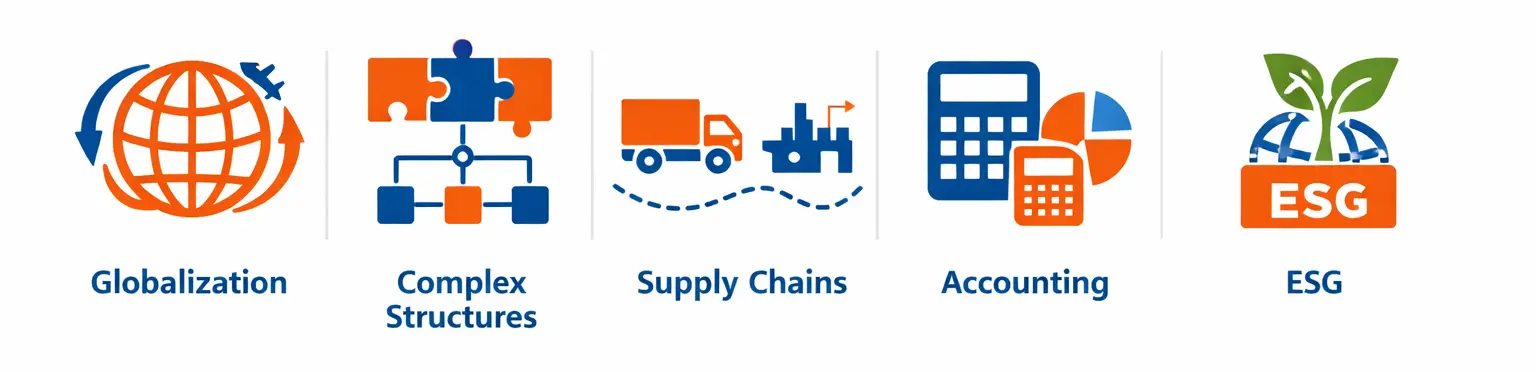
- Internationalization and interconnected corporate structures
- Complex, heterogeneous business landscapes, especially in diversified groups (segment reporting)
- Global trade policy and supply chains – including tariffs, bottlenecks, and geopolitical factors
- Parallel accounting systems (e.g., HGB and IFRS) in reporting
- New regulatory requirements such as ESG and sustainability reporting
This growing complexity calls for agile action and modern tools that create transparency and accelerate decision-making.
Learn how our Planning Team at HICO Group helps companies establish agility and transparency in corporate management.
Operational Level: Planning and Steering
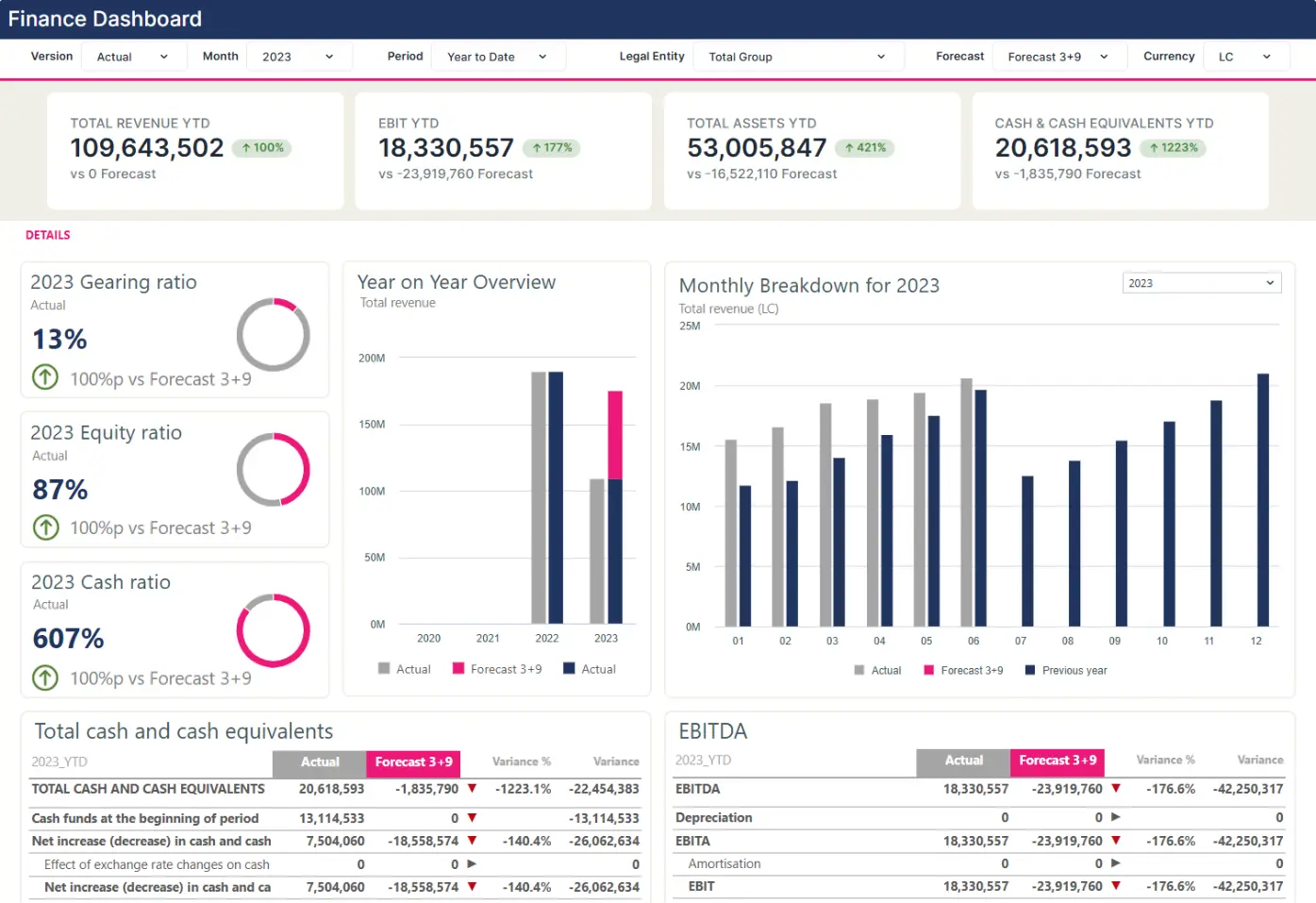
An integrated corporate controlling approach enables targeted steering based on detailed information and transparent data. Operational business plans are closely linked to overarching management processes.
This includes, for example, sales and revenue planning that considers customers, product groups, and markets. Capacity and resource planning can also be mapped and simulated to detect group-wide fluctuations early and respond proactively.
Human resources management plays a crucial role here: workforce levels, salary structures, and other cost drivers are strategically planned and integrated into overall management, providing a comprehensive picture of corporate resources.
Moreover, modern business planning requires flexibility, especially when preparing forecasts. Today, forecasts are often rolling and updated monthly. Intelligent planning and controlling systems support this process with automated suggestions and derived forecast values — using AI-assisted analyses or trend evaluations from past periods.
The result is a dynamic planning landscape that responds to short-term market changes while keeping long-term goals in sight.
Strategic Level: Foresight and Scenarios
While operational control supports short-term decision-making, strategic planning focuses on long-term developments and objectives. The planning horizon can be flexibly extended to model long-term business scenarios. This allows alternative developments in business areas, cost structures, or markets to be simulated and evaluated.
When combined with operational modules, a holistic management approach emerges. Tools such as the Balanced Scorecard link strategic objectives with specific KPIs and actions.
Driver-Based Controlling - Simulation and Agility
In this integrated view of corporate controlling, driver-based modeling is increasingly key. Central influencing factors are identified to simulate the impact of changes — enabling “what-if” analyses that support actionable alternatives before decisions are made.
Internal and external benchmarks can also be incorporated to realistically assess performance. Risk management aspects can be integrated into these analyses as well. The outcome is a data-driven and flexible management model that boosts transparency and accelerates decision-making.

Collaboration and Transparency
The human side of controlling: Beyond numbers and KPIs, effective corporate controlling thrives on communication and collaboration. “Soft” information often plays a decisive role in understanding and shaping corporate decisions.
Modern tools for better collaboration: Modern planning and controlling solutions therefore define clear processes and workflows. Comments, approvals, and notes can be stored directly in the system — ensuring that all stakeholders have real-time access to the latest information. Variance analyses between targets and actuals can also be communicated transparently and addressed efficiently.
Shared data, shared understanding: To ensure smooth interaction, decentralized units, corporate controllers, and management ideally rely on a shared data platform. Multi-user access enables real-time collaboration across locations — increasing efficiency, transparency, and consistency in corporate steering.
Integrated controlling in practice: The functions described here are integral components of modern planning and controlling systems — demonstrating how integrated controlling works in practice.
We would be happy to show you in a live demo how these solutions can be applied in your company.
Your Partner for Agile and
Future-Ready Corporate Controlling
HICO Group helps you make your corporate controlling future-ready and agile — combining experience, technological expertise, and a strong planning team that transforms your visions into structure and transparency.